| |
| Tuesday, 13 October 2026 |
| Changing Everything - Andrew Lloyd Webber and the passion of musical theatre |
| John Snelson |
 |
Andrew Lloyd Webber is probably the most successful creative force within contemporary musical theatre. His music is known worldwide more than any other musical theatre composer. With such a range of stories and styles, what defines a ‘Lloyd Webber’ show? What has driven such extraordinary achievement? Our lecturer, John Snelson, will explore the biography, works and collaborations of Andrew Lloyd Webber to discover some answers.
John Snelson has a degree in music from Nottingham and a PhD from Birmingham. Following an early career in teaching, has worked for twenty years at the Royal Opera House and is now a leading expert in British musical theatre. He has written a number of books exploring musicals and their enduring appeal. He has contributed chapters in many authoritative reference works. John has given talks for, among others, the Royal Opera House, English National Opera, the Garsington and Glyndebourne festivals and for BBC radio. He currently lectures at Goldsmiths, University of London. |
|
| Tuesday, 10 November 2026 |
| From Jacob Epstein to the 'Geometry of Fear' - the rise of modern British sculpture |
| Anna Moszynska |
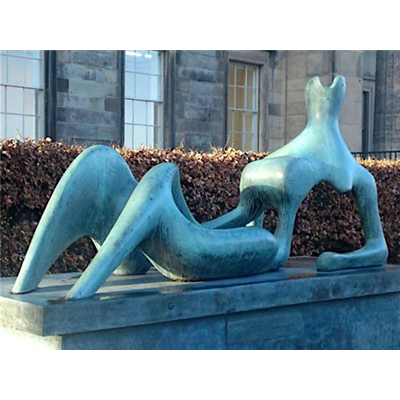 |
The 20th century saw the start of modern sculpture. Our lecturer, Anna Moszynska, will trace the exciting trajectory of British sculpture during the first half of the 20th century. Across a diversity of practice - from Jacob Epstein's controversial commissions for architectural embellishments; through the embrace of direct carving from Henry Moore and Barbara Hepworth; to the construction of form through welded metal from the ‘Geometry of Fear’ group - British sculptors of this period played a pioneering role.
Anna Moszynska is a London-based lecturer and writer specialising in contemporary art. She has a masters degree from The Courtauld Institute and she oversaw the development of a masters degree course in contemporary art at Sotheby's. She has taught at City Lit, the Royal Academy and the Tate as well as at international establishments. She has written a number of books and many catalogue essays on living artists. |
|
| Tuesday, 12 January 2027 |
| 18th Century English Porcelain - Chelsea, Worcester, Bow and Derby |
| Jane Gardiner |
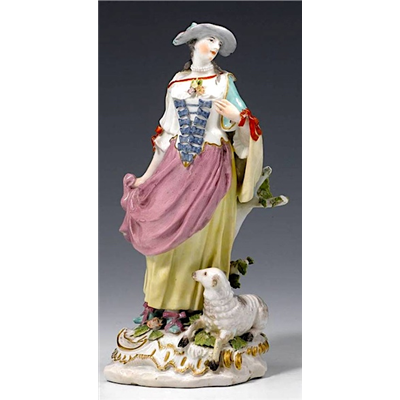 |
Porcelain was invented by Chinese potters during the first millennium and the export of their wares inspired European designs. Our lecturer, Jane Gardiner, will tell us about early experiments into porcelain making in England; concentrating on the Chelsea, Bow, Derby and Worcester factories. She will discuss the different pastes developed in an attempt to achieve both whiteness and strength and tell us about the ways in which porcelain was displayed including the fashion for porcelain figures.
Jane Gardiner has a masters in History of Art from the University of London and subsequently trained at the V&A, continuing to lecture there. She was Senior Lecturer at Sotheby’s Institute of Art for 17 years, becoming a Deputy Director of Sotheby's, UK. She has also lectured for the National Trust, the Art Fund, London University, Buckingham University, l'Institut d'Etudes Superieures des Arts in Paris, on cruise ships and at antiques fairs and interior design conferences in America. |
|
| Tuesday, 09 February 2027 |
| Holbein and Shakespeare cross paths |
| Gabriel Chanan |
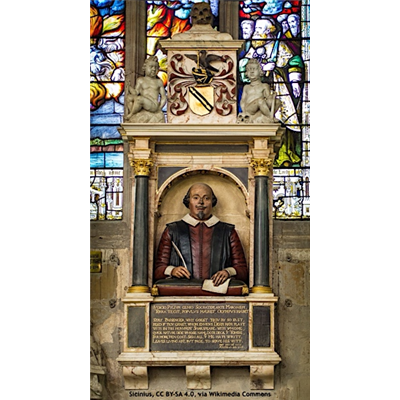 |
Holbein’s mere thirteen years in England defined for ever our image of the court of Henry VIII. These were the years of Henry’s infatuation with Anne Boleyn, and his seizure of the English Church. 75 years later Shakespeare’s picture is set in exactly Holbein’s time but sees the same characters differently. And both are different from Hilary Mantel’s ‘Wolf Hall’. Our lecturer, Gabriel Chanan, will take us through the surprising connections between an artist who left no writings and the playwright who was outstandingly articulate about almost every aspect of his time, but resoundingly silent on religion – and painting.
Gabriel Chanan took up lecturing on art history in 2015, building on his lifelong interest in the arts during a career as a social researcher and policy analyst. His study of the visual arts focuses mainly on realist painting, especially on points of transition between different periods and styles. In 2015 his book, 'Shakespeare and Democracy', was published. He also ran a small theatre company performing at arts centres and festivals until 2020. He was awarded an MBE for services to community development in 2009. |
|
| Tuesday, 09 March 2027 |
| A Portrait of Jewels - Following missing treasures through canvas |
| Andrew Prince |
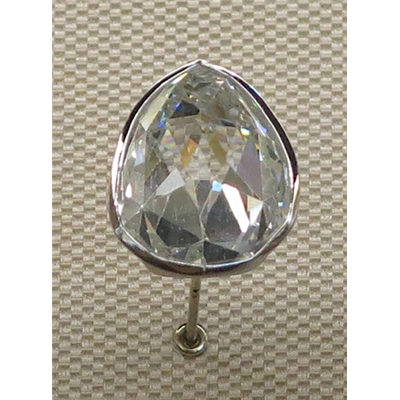 |
In the National Portrait Gallery are paintings of Tudor, Stuart and Hanoverian monarchs in all their bejewelled finery. Where are these jewels now? Andrew Prince, our lecturer, will follow the trails of glowing pearls that belonged to a succession of monarchs. He will also tell us about a spectacular and historic diamond that belonged to King James I, King Charles I and was later sold, worn by Marie Antoinette, stolen during the French Revolution, purchased by a Russian Aristocrat and later mounted in a tiara by Cartier for an American Heiress who became a British MP.
Andrew Prince has been fascinated by jewels and jewellery from his childhood. Aged 16 he started work in London’s Bond Street, working for The Antiques Roadshow expert Ian Harris. Under his guidance, Andrew developed an appreciation for jewels that were valued for their quality of design and craftsmanship rather than jewel value. He then joined the renowned contemporary jeweller Elizabeth Gage and worked with her on the design and production side. He has since been commissioned to design jewellery for celebrities and later on, costume jewellery for films and television. |
|